
Difference Between Feminized and Autoflower
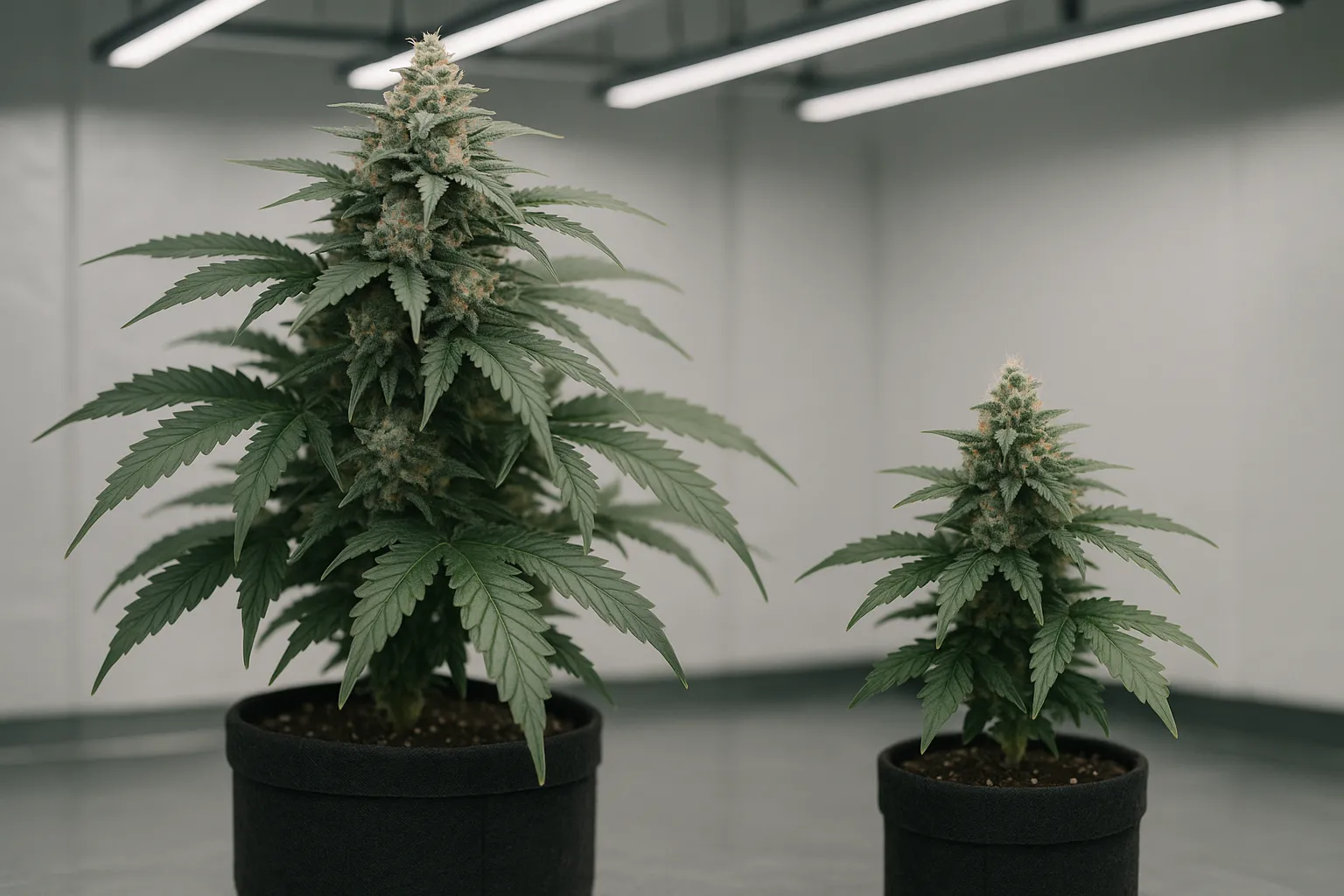
The difference between feminized and autoflower cannabis seeds is one of the first things growers need to understand before starting a new crop. Choosing the right seed type affects how long your plants take to mature, how big they get, and how much control you have over the entire grow cycle.
What Is the Difference Between Feminized and Autoflower Seeds?
At the most basic level, feminized seeds are bred to produce only female plants, while autoflower seeds are bred to flower automatically based on age rather than light schedule. Many modern autoflower seeds are also feminized, but the terms refer to different traits:
- Feminized: Focuses on plant sex (female-only plants).
- Autoflower: Focuses on flowering behavior (time-based flowering).
Understanding Feminized Seeds
What Are Feminized Cannabis Seeds?
Feminized seeds are produced so that nearly every seed grows into a female plant. Female cannabis plants develop the resinous buds that most growers are looking for, while male plants produce pollen sacs and do not create usable flowers.
Breeders create feminized seeds by inducing a female plant to produce pollen, which is then used to pollinate another female. Because both parents are female, the resulting seeds lack the genetics needed to produce male plants.
Advantages of Feminized Seeds
- Higher bud yield per plant: With almost all plants turning out female, more of your grow space is dedicated to flower production.
- No need to remove males: In regular (non-feminized) seeds, growers must identify and remove male plants early to avoid pollination.
- Predictable results: Feminized photoperiod strains are stable and well suited to training techniques such as topping, low-stress training (LST), and Screen of Green (ScrOG).
Considerations with Feminized Seeds
- Depend on light cycles: Feminized photoperiod plants need a change in light schedule (e.g., from 18/6 to 12/12) to start flowering.
- Longer grow times: They usually take longer from seed to harvest than autoflowers, but often reward growers with larger plants and higher yields.
- More sensitive to stress: Severe stress can sometimes cause hermaphroditism, so stable conditions are important.
Autoflower Seeds: How They Differ
What Are Autoflower Cannabis Seeds?
Autoflowering seeds contain genetics from Cannabis ruderalis, a subspecies that evolved in northern regions with short summers. These plants flower automatically after a certain age, usually around 3 to 5 weeks from germination, regardless of the light cycle.
Most modern autoflower seeds are also feminized, so they combine automatic flowering with female-only plants. This is why the difference between feminized and autoflower can be confusing: one term describes sex, the other describes flowering behavior.
Benefits of Autoflower Seeds
- Fast harvests: Many autoflowers go from seed to harvest in 8 to 12 weeks, ideal for quick cycles.
- No light schedule change: They can stay under 18 to 24 hours of light from start to finish, simplifying indoor grows.
- Compact plants: Autoflowers stay relatively small, making them suitable for limited spaces, balconies, or discreet outdoor spots.
- Beginner friendly: The automatic flowering trait reduces the risk of mistakes with light schedules.
Limitations of Autoflower Seeds
- Generally smaller yields per plant: Their compact size and short life cycle often mean less total bud per plant compared to large photoperiod feminized plants.
- Less training time: Because they start flowering so quickly, aggressive training or transplanting can stunt them.
- Less control over veg time: You cannot extend the vegetative phase to grow bigger plants before flowering.
Difference Between Feminized and Autoflower in Practical Growing
Indoor Growing
Indoors, feminized photoperiod seeds give you precise control. You can:
- Keep plants in vegetative growth as long as you want under 18/6 light.
- Shape plants with topping, pruning, and training for maximum yield.
- Trigger flowering by switching to 12/12 when plants reach the desired size.
Autoflowers indoors are simpler but less flexible. You can run them on a constant 18/6 schedule and harvest quickly, but you have limited ability to correct mistakes because the plant is always racing toward maturity.
Outdoor Growing
Outdoors, the difference between feminized and autoflower affects timing and climate strategy:
- Feminized photoperiod: Depend on natural daylight changes. They are ideal in regions with long, warm summers where they can fully mature.
- Autoflower: Can be planted multiple times per season and are useful in cooler or shorter-summer climates where big photoperiod plants might not finish in time.
How to Choose Between Feminized and Autoflower Seeds
When deciding which type to grow, consider:
- Experience level: Beginners often appreciate the simplicity and speed of autoflowers. Intermediate and advanced growers may prefer the control and yield potential of feminized photoperiods.
- Available space: Small or stealth grows benefit from compact autoflowers, while larger grow rooms or gardens can take advantage of big feminized plants.
- Time frame: If you need a quick harvest, autoflowers are usually faster. If you can wait longer, feminized seeds can deliver heavier yields.
- Desired control: Choose feminized photoperiod seeds if you want to fine-tune plant size, structure, and timing.
Conclusion
The key difference between feminized and autoflower seeds is that feminized refers to female-only plants, while autoflower refers to plants that bloom automatically with age. Many modern strains combine both traits, giving growers a wide range of options. By matching your seed choice to your space, climate, skill level, and timeline, you can set yourself up for a smoother grow and a more satisfying harvest.