
Cannabis Market Size by State
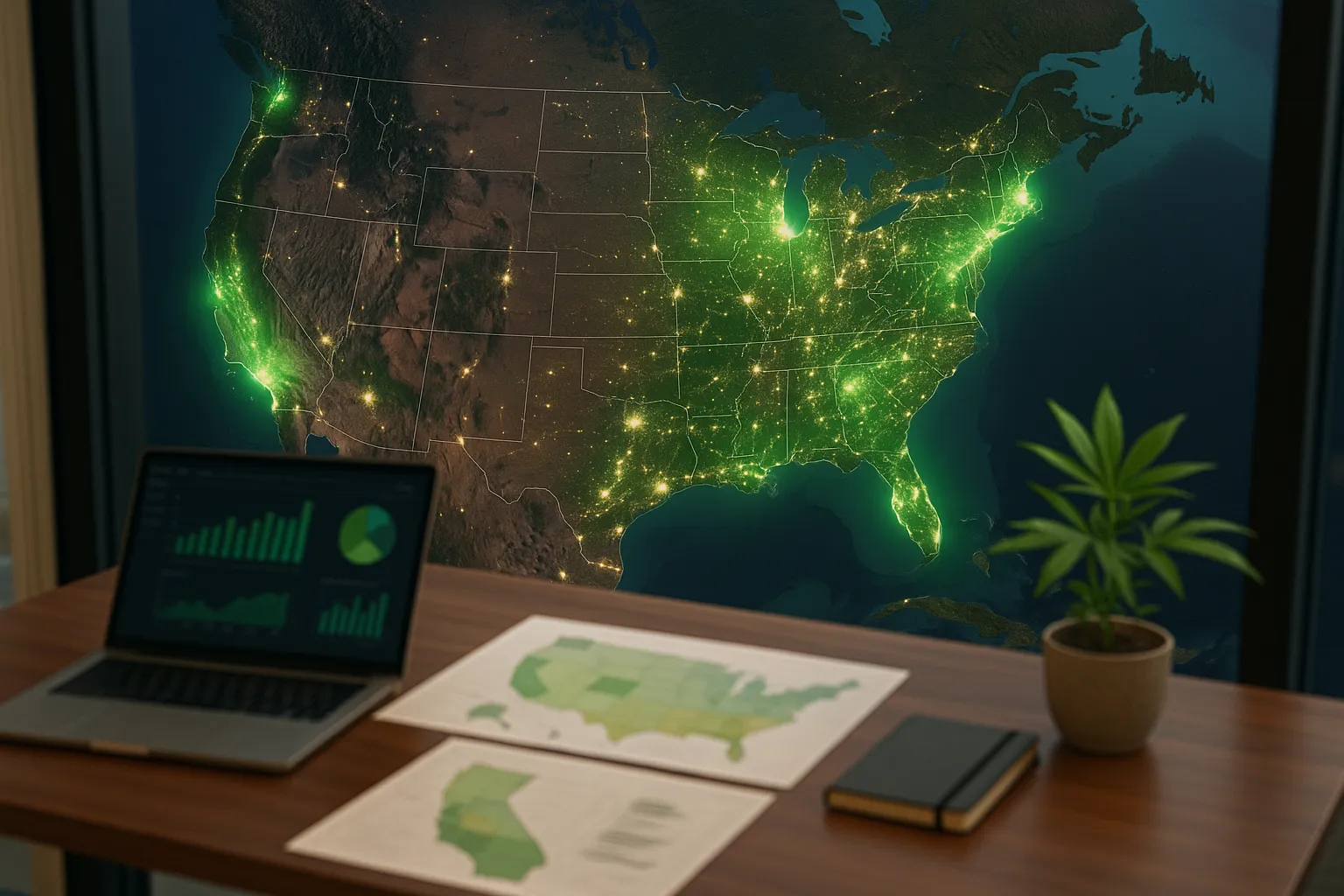
The cannabis market size by state has become a key metric for investors, entrepreneurs, and policymakers who want to understand where growth is happening and why. As more states legalize medical and adult-use cannabis, local regulations, demographics, and consumer behavior are shaping very different market outcomes across the United States.
What Determines Cannabis Market Size by State?
State cannabis markets do not grow at the same pace or reach the same scale. Several core factors explain the differences in market size and revenue potential.
- Legal framework: Adult-use legalization typically drives much larger sales than medical-only programs, especially when possession limits and product categories are broad.
- Population and tourism: States with large populations or strong tourism, such as California, Florida, Nevada, and New York, tend to generate higher cannabis demand.
- Tax rates and pricing: High excise taxes can push consumers toward the illicit market, while balanced tax structures support sustainable legal sales.
- Licensing structure: Open licensing models often improve access and competition, while very limited licenses can constrain supply and keep prices high.
- Local control: City and county bans on dispensaries or cultivation can limit access and slow market growth even in legal states.
Leading States by Cannabis Market Size
While exact rankings change as new markets launch, several states consistently stand out for their large cannabis sales and strong consumer demand.
California: The Largest U.S. Cannabis Market
California remains the largest legal cannabis market in the country, driven by its population, mature consumer base, and long history of medical cannabis. Adult-use legalization expanded product diversity, with strong sales in flower, pre-rolls, vapes, and edibles.
However, California also illustrates the challenges of scaling a legal market. High taxes, complex regulations, and significant local bans on retail stores have allowed the illicit market to remain active, limiting the full potential of legal sales.
Colorado and Washington: Mature Adult-Use Markets
Colorado and Washington were early adopters of recreational cannabis and now operate relatively stable, mature markets. Their cannabis market size by state is not growing as fast as newer states but provides valuable data on long-term trends, such as:
- Price compression as more producers enter the market
- Shift from flower to value-added products like vapes and edibles
- Increasing consumer sophistication and brand loyalty
Emerging Giants: New York, New Jersey, and the East Coast
New York and New Jersey are expected to become major cannabis markets due to their dense populations and regional influence. Early rollout challenges, including limited retail access and evolving regulations, have slowed growth, but the long-term opportunity remains significant.
Other East Coast states, such as Massachusetts, Maryland, and Pennsylvania, are also building substantial markets, particularly as adult-use programs expand and cross-border purchasing becomes easier.
Cannabis Market Size by State: Medical vs Adult-Use
The structure of a state program has a direct impact on market size. Medical-only states tend to have smaller but often more stable markets, while adult-use states see rapid expansion and higher total sales.
- Medical cannabis markets: Often restricted to patients with qualifying conditions, with tighter product and potency rules. These markets may have lower volumes but can support higher per-patient spending.
- Adult-use cannabis markets: Open to all adults over a certain age, typically 21. These states usually see a surge in retail sales and a broader range of product types, brands, and price points.
Some large states, such as Florida, currently operate major medical-only markets but are poised for significant growth if adult-use legalization is adopted.
Key Trends Shaping State Cannabis Markets
Beyond basic legalization status, several broader trends influence the cannabis market size by state and the competitive landscape.
- Normalization and consumer adoption: As stigma declines, more adults experiment with cannabis, particularly in the wellness and low-dose categories.
- Product innovation: Growth in beverages, fast-acting edibles, and minor cannabinoids like CBN and CBG is diversifying revenue streams.
- Retail experience: Dispensaries are evolving from basic storefronts into branded retail environments with education-focused staff and loyalty programs.
- Interstate competition: States with slower rollouts or higher taxes risk losing customers to neighboring states with more accessible and affordable products.
Opportunities for Businesses and Investors
Understanding cannabis market size by state is essential for strategic planning. Companies and investors can use state-level data to prioritize expansion and manage risk.
- High-growth states: Newly legal adult-use markets often offer strong top-line growth but can carry regulatory uncertainty.
- Mature markets: Established states may present opportunities in consolidation, brand building, and operational efficiency.
- Niche segments: Within each state, specialized products such as premium flower, wellness products, or value brands can capture distinct consumer segments.
Conclusion
The cannabis market size by state reflects a complex mix of law, economics, and consumer behavior. Large, population-rich states with balanced regulations and accessible retail networks tend to generate the highest sales, but every market follows its own trajectory. For stakeholders across the industry, tracking state-level trends, regulatory changes, and consumer preferences is critical to identifying where the next wave of growth is likely to appear.