
Cannabis Laws USA
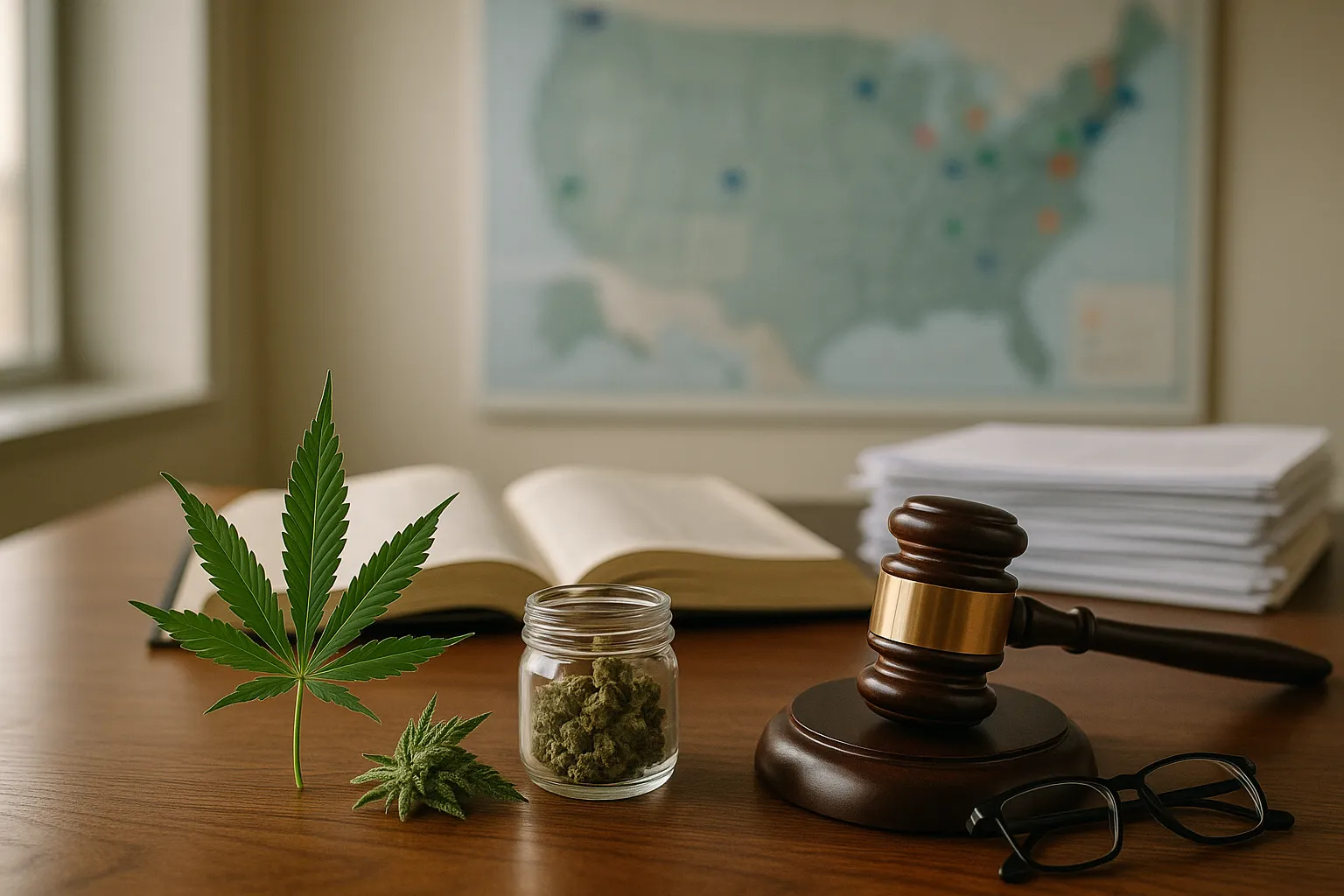
Cannabis laws in the USA are complex, fast changing, and often confusing. Between federal prohibition, state legalization, and differing rules on medical and recreational use, it can be difficult to know what is actually legal. This guide explains how Cannabis Laws USA work in practice, what consumers and businesses should know, and where the law may be heading.
Understanding Cannabis Laws USA: Federal vs. State
Federal law: cannabis remains illegal
Under the federal Controlled Substances Act, cannabis is still classified as a Schedule I substance. This means:
- Possession, cultivation, and distribution of cannabis are illegal under federal law.
- Banks and payment processors face strict rules when serving cannabis businesses.
- Interstate transport of cannabis products is prohibited, even between legal states.
In practice, federal agencies have generally taken a hands-off approach to individuals and state-licensed businesses that follow state regulations, but the legal risk has not fully disappeared.
State legalization and decriminalization
Most of the real change in Cannabis Laws USA has come from the states. Broadly, states fall into three categories:
- Recreational and medical legal – adults can purchase cannabis for personal use from licensed dispensaries, and medical programs also exist.
- Medical only – cannabis is allowed for qualified patients with a medical card or physician recommendation.
- Prohibited or limited – possession remains illegal or only very low-THC products (often CBD) are allowed.
Penalties and protections vary widely, so it is essential to check the specific rules in your state and locality.
Key Elements of State Cannabis Regulations
Possession limits and age requirements
Legal states typically set clear rules on how much cannabis an adult may possess and who can buy it:
- Minimum age is usually 21 for recreational use, similar to alcohol.
- Possession limits often range from 1 to 2 ounces of flower, with separate limits for concentrates and edibles.
- Medical patients may be allowed higher limits or special products.
Exceeding these limits can turn a civil infraction into a criminal offense, even in legal states.
Where you can and cannot consume
Most states that have legalized cannabis still restrict where it can be used:
- Public consumption is usually banned or tightly limited.
- Use is generally allowed only on private property with the owner's permission.
- Some cities license cannabis lounges or social consumption spaces, but these remain rare.
Violating public use rules can lead to fines and, in some cases, criminal charges.
Home cultivation rules
Many, but not all, legal states allow adults to grow a small number of plants at home. Typical requirements include:
- Plant limits per adult and per household.
- Plants must be kept out of public view and in a secure area.
- Landlords and housing providers may prohibit cultivation in rental properties.
Medical programs may permit additional plants for patients with higher needs, subject to registration or local approval.
Driving, Employment, and Other Legal Risks
Driving under the influence
Every state prohibits driving under the influence of cannabis. Some have set per se THC blood limits, while others rely on officer observations and field sobriety tests. Key points include:
- Open container rules often apply to cannabis products in vehicles.
- Passengers may also face restrictions on use inside vehicles.
- Convictions can lead to fines, license suspension, and criminal records.
Employment and workplace policies
Even where cannabis is legal, employers often retain significant control over workplace rules:
- Many employers maintain drug-free workplace policies and may test for THC.
- Some states protect off-duty medical or recreational use, but these protections are limited and vary.
- Safety-sensitive jobs, such as transportation or heavy equipment operation, face stricter standards.
Employees should review company policies and any applicable state protections before assuming their use is shielded from consequences.
Travel and federal property
Cannabis remains illegal on federal property, even in legal states. This includes:
- National parks and forests
- Federal buildings and courthouses
- Military bases and some airports
Carrying cannabis across state lines or through airport security can trigger federal jurisdiction, regardless of state laws at departure or destination.
The Future of Cannabis Laws in the USA
Rescheduling and federal reform
Federal agencies and lawmakers continue to debate rescheduling cannabis, expanding medical research, and easing banking and tax barriers for licensed businesses. Potential reforms include:
- Moving cannabis to a lower schedule under federal law.
- Allowing traditional banking services for state-legal businesses.
- Creating national standards for product testing and labeling.
What consumers and businesses should do now
Given the patchwork nature of Cannabis Laws USA, it is wise to:
- Check current state and local regulations before buying, using, or growing cannabis.
- Understand your rights and obligations at work, on the road, and when traveling.
- Consult a qualified attorney for specific legal questions or business planning.
Conclusion
Cannabis laws in the USA are evolving rapidly, but federal prohibition, diverse state systems, and strict rules on driving, employment, and travel still create real legal risks. By understanding the basic structure of federal and state regulations, staying informed about changes, and approaching use and business activity carefully, individuals and companies can better navigate this complex legal landscape.