
Cannabis Drying Chart
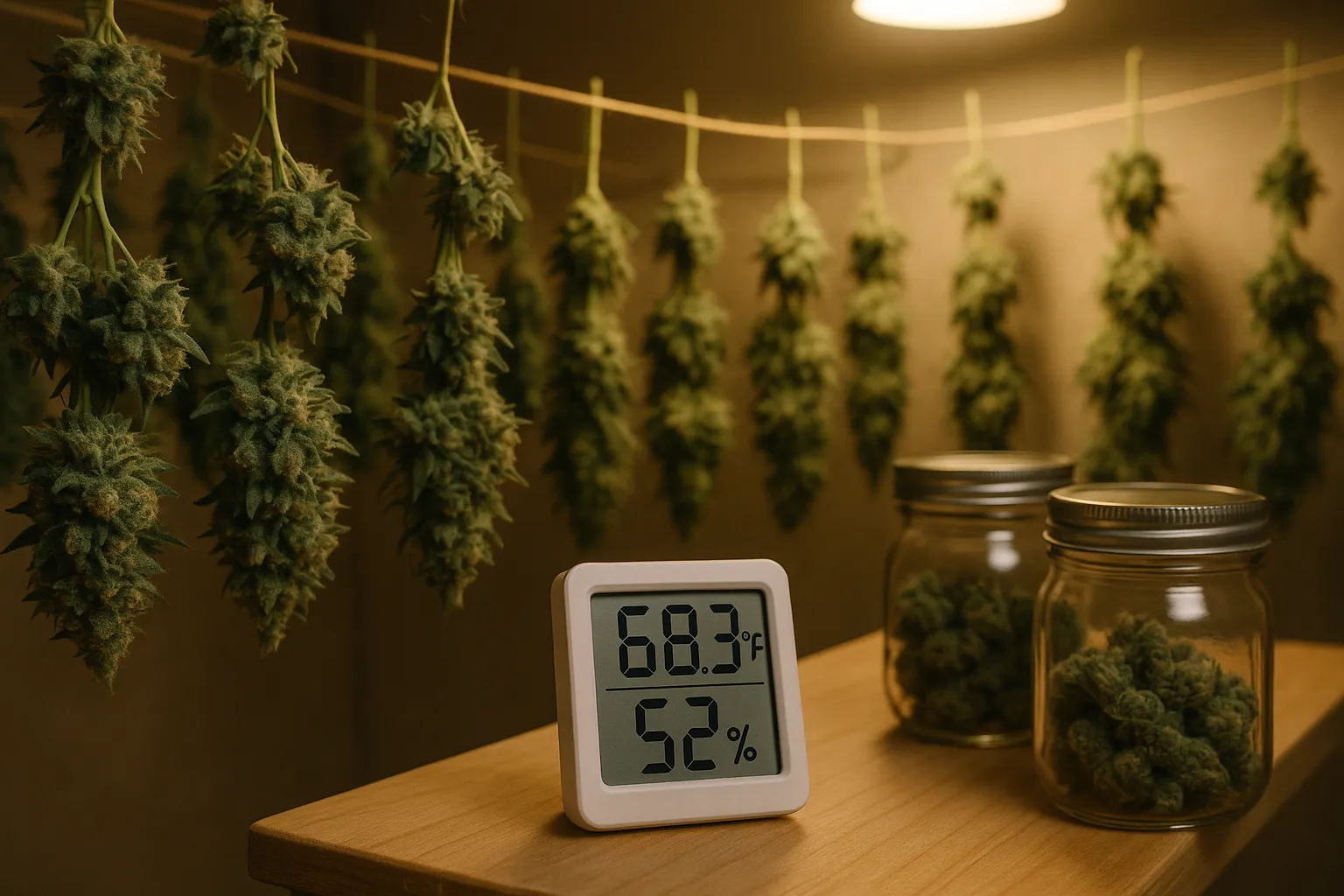
Using a clear, well-structured cannabis drying chart is one of the easiest ways to avoid crispy, harsh buds or moldy flowers. Whether you are a home grower or managing a small craft operation, understanding time, temperature, and humidity is essential for preserving flavor, potency, and smoothness.
What Is a Cannabis Drying Chart and Why It Matters
A cannabis drying chart is a simple reference that summarizes the ideal environmental conditions and time frames for drying freshly harvested cannabis. It usually includes:
- Temperature ranges (in degrees Celsius or Fahrenheit)
- Relative humidity (RH) targets
- Recommended drying duration in days
- Visual and tactile cues to know when buds are ready
Drying too fast can lock in chlorophyll and create a harsh smoke. Drying too slowly increases the risk of mold and can lead to grassy aromas. A chart helps you keep conditions in the sweet spot, especially when combined with a hygrometer and thermometer.
Core Parameters on a Cannabis Drying Chart
Most growers aim for a slow, controlled dry. Typical chart values look like this:
- Temperature: 18 to 21 C (64 to 70 F)
- Relative Humidity: 50 to 60 percent RH
- Airflow: Gentle, indirect air movement, not blowing directly on buds
- Darkness: Complete or near-complete darkness to protect cannabinoids and terpenes
- Time: 7 to 14 days for most small to medium-sized flowers
Within these ranges, minor adjustments can speed up or slow down the process, but staying close to these targets gives a consistent, predictable dry.
Cannabis Drying Chart: Day-by-Day Breakdown
Below is a simple, text-based cannabis drying chart you can follow and adapt to your own setup.
Days 1 to 2: Initial Moisture Release
- Temperature: 18 to 20 C (64 to 68 F)
- Humidity: 55 to 60 percent RH
- Goal: Allow outer moisture to leave slowly without overdrying the surface.
During this phase, stems are still very flexible and buds feel cool and damp. Ensure good air exchange in the room, but avoid fans blowing directly on the plants.
Days 3 to 5: Controlled Slow Dry
- Temperature: 18 to 21 C (64 to 70 F)
- Humidity: 50 to 55 percent RH
- Goal: Steady moisture migration from the center of the buds to the outside.
Now the outer surface begins to feel drier, but the inside is still moist. Aroma should become more pronounced. If buds feel crispy this early, your environment is too dry and you should raise RH slightly.
Days 6 to 10: Final Drying Window
- Temperature: 18 to 20 C (64 to 68 F)
- Humidity: 50 percent RH, with small fluctuations
- Goal: Reach the ideal dryness for curing and storage.
Test smaller branches: when they snap rather than bend, you are close. Buds should feel dry on the outside but not crumble when gently squeezed. Most growers will trim and jar their flowers during this period.
Adjusting the Cannabis Drying Chart for Your Climate
Real-world conditions rarely match a perfect chart. Here is how to adapt:
- Very dry climate (RH under 35 percent): Lower temperature a few degrees, use a humidifier, and avoid direct airflow. Consider leaving more leaf material on the buds to slow the dry.
- Very humid climate (RH over 65 percent): Use a dehumidifier, increase gentle air movement, and keep buds spaced apart. Check closely for mold, especially in dense colas.
- Cool basements or warm attics: Insulate the drying area and use a small heater or AC unit with a thermostat to keep temperature in range.
The chart is a guide, not a rule book. Your tools, room size, and climate all influence how you apply it.
Reading Dryness: Beyond the Numbers
While a cannabis drying chart focuses on temperature and humidity, your senses are equally important:
- Touch: Buds should feel dry on the outside, but still slightly spongy when squeezed.
- Smell: The aroma should shift from fresh-cut grass to the characteristic scent of the strain.
- Stems: Thin stems should snap; thicker stems may bend with a partial crack.
If buds are brittle, you have gone too far. If they still feel wet or smell like chlorophyll after 10 to 14 days, they likely need more time or slightly lower humidity during the next run.
From Drying to Curing
Drying is only the first half of post-harvest. Once buds are at the correct dryness, move them into airtight glass jars for curing:
- Fill jars about 70 to 80 percent full to allow some airspace.
- Keep jars at 18 to 21 C (64 to 70 F) and 58 to 62 percent RH.
- Burp jars daily for the first week, then less often as moisture equalizes.
A good cure of 2 to 4 weeks, sometimes longer, smooths out the smoke and enhances terpene expression.
Conclusion
A clear, realistic cannabis drying chart gives you a framework to manage temperature, humidity, and time so that each harvest dries evenly and safely. By combining chart-based targets with careful observation of touch, smell, and stem flexibility, you can consistently produce flavorful, potent, and smooth cannabis ready for a proper cure and long-term storage.