
Broad Spectrum vs CBD Isolate
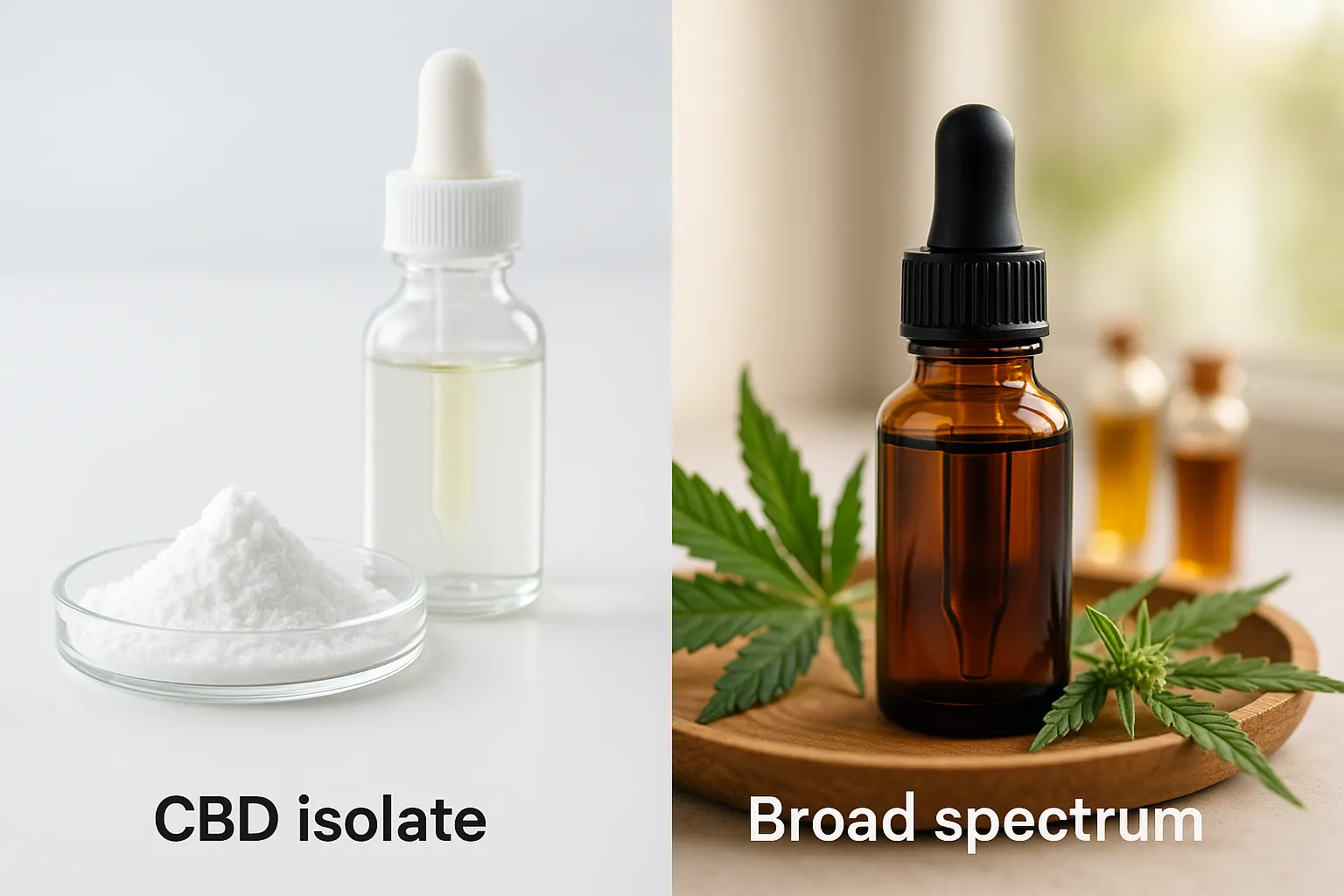
Choosing between Broad Spectrum vs CBD Isolate can feel confusing when you are new to CBD products. Both options offer unique benefits and are used for different wellness goals, but understanding the differences is essential before you buy.
What Do Broad Spectrum and CBD Isolate Mean?
What Is CBD Isolate?
CBD isolate is the purest form of cannabidiol. It is typically produced as a crystalline powder or fine white crystals that contain 99 percent or more CBD and no other cannabinoids.
To make CBD isolate, manufacturers use extraction and purification processes to remove:
- Other cannabinoids such as CBG, CBC, and trace THC
- Terpenes and flavonoids (aromatic and flavor compounds)
- Plant waxes, chlorophyll, and other hemp components
The final product is a single-molecule extract: just CBD, with no measurable THC and no additional plant compounds.
What Is Broad Spectrum CBD?
Broad spectrum CBD is a type of extract that contains CBD plus a range of other naturally occurring compounds from the hemp plant, but with THC removed to non-detectable levels.
Broad spectrum products usually include:
- Multiple cannabinoids such as CBG, CBC, and sometimes CBN
- Terpenes that contribute aroma, taste, and potential effects
- Flavonoids and other beneficial plant molecules
This profile aims to deliver many of the potential advantages of whole-plant hemp extracts, without the concern of ingesting THC.
Broad Spectrum vs CBD Isolate: Key Differences
Cannabinoid Profile
The most important distinction in Broad Spectrum vs CBD Isolate is the number of compounds present.
- CBD Isolate: Only CBD, no additional cannabinoids or terpenes.
- Broad Spectrum: CBD plus a variety of minor cannabinoids and terpenes, but 0 percent detectable THC.
The Entourage Effect
Broad spectrum CBD may support what researchers call the entourage effect the idea that cannabinoids and terpenes may work better together than alone. While evidence is still emerging, many users report that broad spectrum feels more balanced or effective at lower doses compared with isolate.
CBD isolate, by contrast, provides targeted cannabidiol without the influence of other hemp compounds. This can be useful if you want to evaluate exactly how CBD alone affects you.
THC Content and Drug Testing
For people subject to workplace drug testing, THC content is a major consideration.
- CBD Isolate: Contains no detectable THC when properly manufactured and tested. It is generally the safest choice if you must avoid THC entirely.
- Broad Spectrum: Designed to be THC-free, but because it is a complex extract, it is essential to confirm this with a recent third-party lab report. High-quality broad spectrum products should show non-detectable THC levels.
Taste and Product Experience
Because it is pure, CBD isolate has almost no flavor or aroma. This makes it popular for:
- Flavorless tinctures
- Capsules and softgels
- Infusing into foods and beverages where you do not want a hemp taste
Broad spectrum CBD often has a more noticeable hemp flavor due to terpenes and other plant compounds. Some users enjoy this natural taste and associate it with a more complete hemp experience.
When to Choose CBD Isolate
CBD isolate can be the better option if:
- You are highly sensitive to THC. Even trace amounts may be a concern for your comfort or job requirements.
- You prefer a neutral taste. Isolate blends easily into foods and drinks without altering flavor much.
- You want precise dosing. With only CBD in the formula, it is straightforward to track your exact milligram intake.
- You are new to CBD. Starting with isolate can help you understand how CBD alone affects you before exploring broader extracts.
When to Choose Broad Spectrum CBD
Broad spectrum CBD may be the better fit if:
- You want a more complete hemp extract without THC. You get multiple cannabinoids and terpenes while avoiding detectable THC.
- You are interested in the entourage effect. The presence of minor cannabinoids and terpenes may support more rounded benefits for stress, recovery, or everyday wellness.
- You do not mind a natural hemp flavor. Some people prefer the plant-forward taste and aroma.
- You have tried isolate and want stronger or more nuanced effects. Broad spectrum can feel different, even at similar CBD doses.
How to Choose Quality in Broad Spectrum vs CBD Isolate
Regardless of which type you choose, product quality is crucial. Look for:
- Third-party lab testing: Certificates of Analysis (COAs) verifying cannabinoid content, THC levels, and purity.
- Clear labeling: Exact milligrams of CBD per serving and total cannabinoids for broad spectrum products.
- Reputable sourcing: Hemp grown under quality standards, ideally with pesticide and contaminant testing.
- Transparent manufacturing: Brands that explain their extraction and THC-removal methods.
Conclusion
In the Broad Spectrum vs CBD Isolate comparison, neither option is universally better; it depends on your goals, sensitivities, and preferences. Choose CBD isolate if you need THC-free certainty, a neutral taste, and simple dosing. Choose broad spectrum if you want a richer hemp extract that may provide more rounded effects while still avoiding detectable THC. By understanding these differences and checking lab reports carefully, you can select the CBD product that best supports your personal wellness routine.